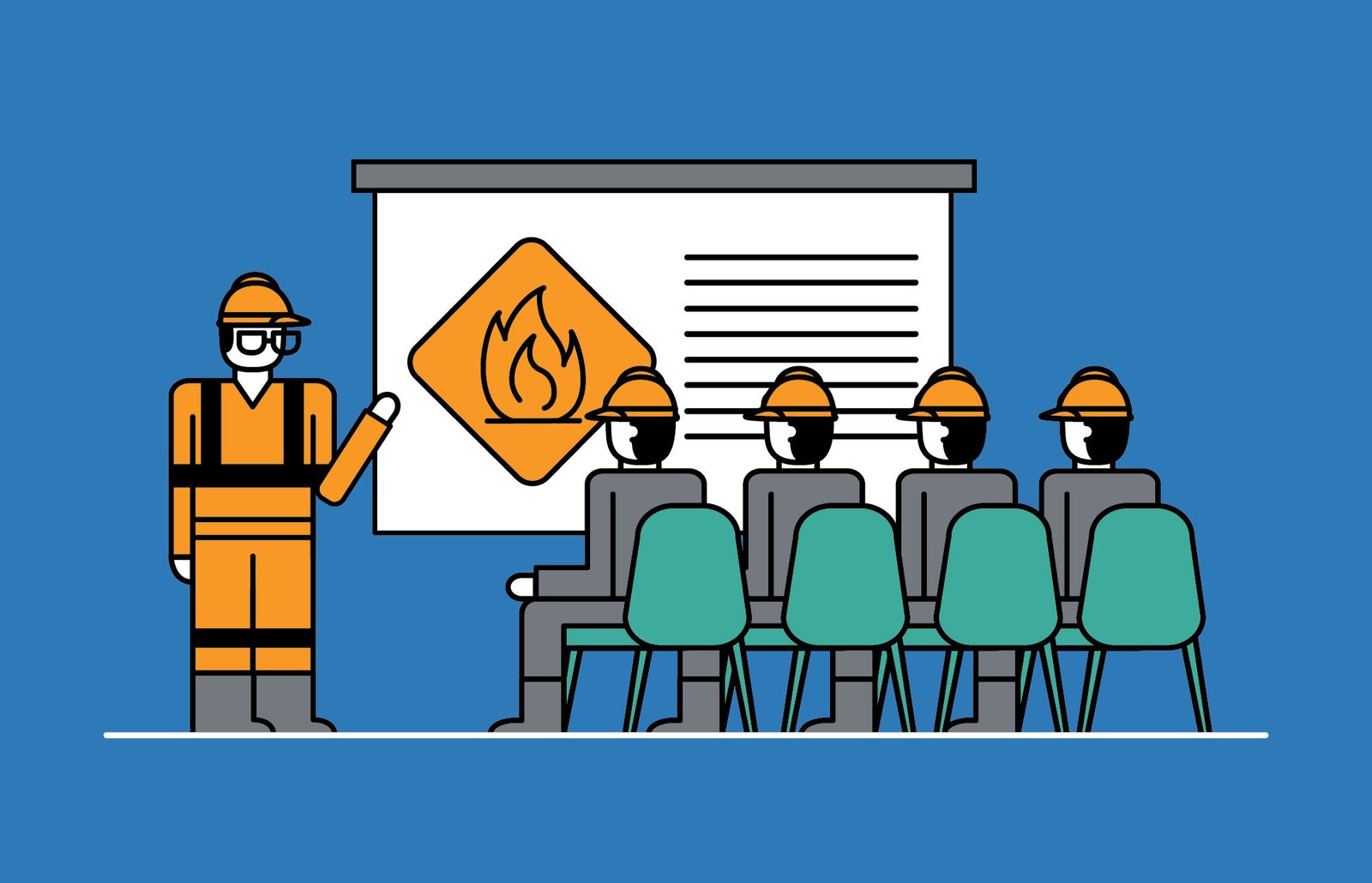
New Health & Safety Training Program

Health & Safety Training Program

Target Audience

  • Workers
  • Supervisors
  • Technicians
  • Industrial Security Personnel
  • HSE Teams
  •  

Days 1–3: Classroom Training


Day 1 – Occupational Health & Safety Fundamentals

  • Introduction to HSE
  • Importance of workplace safety
  • Roles and responsibilities (management, supervisors, workers)
  • Types of occupational hazards
  • Accidents and near-miss concepts
  •  

Day 2 – Risk Assessment and Control Measures

  • Risk assessment principles
  • Risk matrix (likelihood x severity)
  • Hierarchy of controls
  • Job Safety Analysis (JSA) concepts
  • Personal Protective Equipment (PPE) 
  •  

Day 3 – Safe Work Systems and Emergency Response

  • Safe operating procedures (SOPs)
  • Work permit systems
  • Fire safety and evacuation
  • Basic first aid concepts
  • Incident reporting and investigation
  • Safety culture and safe behavior
  •  

Days 4–5: On-the-Job Training (OJT)


Day 4 – Site Risk Identification

  • Workplace hazard identification
  • Emergency exits and assembly points
  • PPE usage observation
  • Practical JSA application


Day 5 – Practical Safety Application

  • Applying safe work procedures
  • Behavior-based safety observation
  • Emergency simulation exercises
  • Field performance evaluation
  • Final session and improvement plan
  •  

Training Outcomes

  • Identify and control workplace hazards
  • Apply occupational safety principles
  • Use PPE correctly
  • Respond to emergencies effectively
  • Promote a positive safety culture
  •  

Training Materials

  • PPT presentations
  • HSE handbook
  • Field checklists
  • JSA templates
  • Incident report forms
  • Certificate of Completion

Related Courses
Talent Management Training Program

Talent Management Training Program

Target AudienceManagers and Department HeadsHuman ResourcesSupervisorsTeam LeadersOrganizational Development Officers Days 1–3: Classroom Training Day 1 – Talent Management FundamentalsTalent management conceptsTalent vs Skill vs CompetencyImportance of talent managementTalent lifecycleRoles of management and HR Day 2 – Talent Acquisition and DevelopmentIdentifying high-potential employeesTalent attraction and recruitment strategiesSuccession planningTalent development approachesCoaching and mentoringAligning talent development with strategy Day 3 – Performance and Talent IntegrationLinking talent management with performanceUsing KPIs in talent evaluationManaging high performersTalent retention strategiesCommon talent management challenges Days 4–5: On-the-Job Training (OJT) Day 4 – Talent Identification and ReviewReviewing organizational structureIdentifying existing talentObserving employee performanceApplying coaching approachesDiscussing talent gaps Day 5 – Practical Talent ManagementParticipating in real performance evaluationLinking performance results to development plansPreparing a basic talent development planRetention decision discussionsFinal session and recommendations Training OutcomesUnderstand talent management conceptsIdentify and evaluate talentLink talent with performanceSupport succession planningContribute to an attractive work environment Training MaterialsPPT presentationsTalent management guideTalent evaluation templatesField checklists,Certificate of Completion

Key Performance Indicators (KPI) Training Program

Key Performance Indicators (KPI) Training Program

Target AudienceManagers and SupervisorsDepartment HeadsPlanning and Monitoring StaffQuality and Performance TeamsHR and Operations Days 1–3: Classroom Training Day 1 – KPI FundamentalsKPI concepts and importanceKPI vs Metrics vs TargetsSMART KPIsLinking KPIs to strategic objectives Day 2 – KPI Design and DevelopmentTypes of KPIs (strategic, operational, individual)Selecting appropriate KPIsData sources and measurement methodsKPIs in operations, maintenance, safety and HRCommon KPI design mistakes Day 3 – KPI Monitoring and AnalysisPerformance monitoringGap analysisLinking KPIs to individual and team performanceDashboard conceptsManagement reporting Days 4–5: On-the-Job Training (OJT) Day 4 – Reviewing Existing KPIsAssessing KPI effectivenessLinking KPIs to daily tasksObserving data collection methodsPractical improvement guidance Day 5 – KPI Application and Decision-MakingMonitoring live KPIsAnalyzing results with supervisorsDecision-making based on KPI resultsImproving reporting mechanismsFinal session and recommendations Training OutcomesUnderstand and interpret KPIsDesign effective KPIsMonitor and analyze performanceUse KPIs for decision-makingImprove individual and organizational performance Training MaterialsPPT presentationsKPI guideline manualKPI templatesMonitoring checklistsCertificate of Completion

Certificate of the Business Continuity Institute (CBCI)

Certificate of the Business Continuity Institute (CBCI)

About the ProgrammeThis specialised programme equips participants with the essential competencies required for Business Continuity Management Systems (BCMS), focusing on real operational environments in Kuwait’s oil, gas, and petrochemical sectors.The training combines global best practices with local applications to support organisational resilience, crisis readiness, and operational continuity.Certification (Important Note)Certificates will be issued exclusively by London Royal Academy (LRA). InfoTech Institute – Kuwait. التدريب، التنظيم، والإشراف يتم من خلال الشهادة تحمل رقم اعتماد وتعريف خاص، موقّعة من الأكاديمية البريطانية. Key Learning AreasDisruption & risk analysis for critical operationsBusiness Impact Analysis (BIA)Design & development of effective Business Continuity Plans (BCP)Communication & response frameworksIncident management structurePerformance monitoring, KPIs and improvement cycleAlignment with global standards and Kuwait petroleum sector needs Target AudienceBusiness Continuity & Crisis Management TeamsHSE, Risk, Compliance, OperationsTeam Leaders & Supervisors in Oil, Gas & PetrochemicalsEmergency Response and Governance Units 5-Day Suggested Outline Day 1 – Foundations & Kuwait ContextBusiness continuity concepts Sector-specific risks BCM framework Petroleum case examples Day 2 – Risk & Impact AnalysisRisk assessment Business Impact Analysis (BIA) Critical process mapping Scenario drillsDay 3 – BCP DevelopmentStrategy selection BCP drafting Resource & recovery planning Workshop exercises Day 4 – Incident Response & CommunicationRoles & structure Crisis communication Table-top exercises Lessons learnedDay 5 – Performance & Exam PrepKPIs & dashboards BCMS performance cycle Documentation CBCI-style review questions Included MaterialsParticipant workbookBCP templatesDisruption analysis toolsKPI & reporting matricesCertificate from London Royal Academy (LRA)