Fire Security Training Program
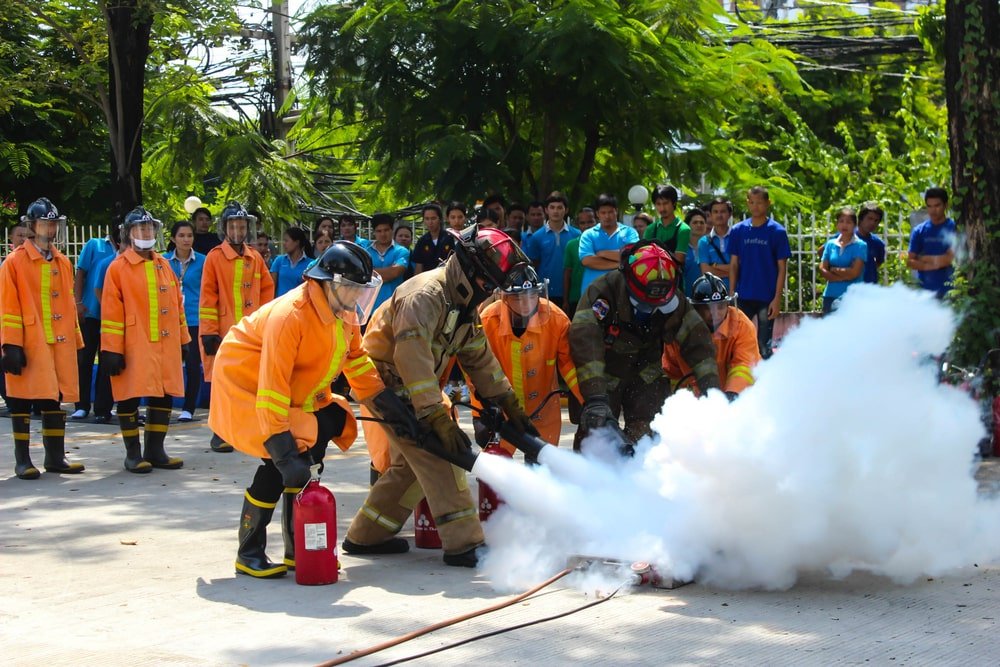
Built for industrial security staff, safety supervisors, emergency response personnel and HSE teams. Participants cover fire security fundamentals and the distinction between fire safety and fire protection, combining classroom sessions with applied practice.
Target Audience
- Industrial Security Staff
- Safety Supervisors
- Emergency Response Personnel
- Operations Technicians and Supervisors
- HSE Teams
Days 1–3: Classroom Training
Day 1 – Fire Security Fundamentals
- Fire Security concepts and importance
- Fire Safety vs Fire Protection vs Fire Security
- Fire science (Fire triangle and tetrahedron)
- Fire behavior and spread
- Fire classifications (Class A, B, C, D, K)
- Roles and responsibilities of Fire Security teams
Day 2 – Fire Detection, Alarm and Firefighting Systems
- Fire detection systems (smoke, heat, flame detectors)
- Fire alarm systems and panels
- Firefighting systems (extinguishers, sprinklers, gas systems)
- Integration between fire and security systems
- Overview of codes and standards (NFPA, Civil Defense)
Day 3 – Emergency Management and Response Planning
- Fire risk assessment concepts
- Emergency and evacuation plans
- Organization of fire response teams
- Communication during emergencies
- Fire incident reporting and investigation basics
Days 4–5: On-the-Job Training (OJT)
Day 4 – Site Familiarization and Systems Review
- Emergency exits and assembly points
- Control rooms and fire panels
- Fire equipment inspection
- Fire scenario simulation and walkthroughs
Day 5 – Emergency Response Exercise
- Practical emergency response drill
- Coordination between response teams
- Initial fire control techniques
- Performance evaluation and improvement
- Final session and lessons learned
Training Outcomes
- Understand fire risks and fire security principles
- Identify fire detection and alarm systems
- Respond effectively to fire emergencies
- Apply evacuation and safety procedures
Training Materials
- PowerPoint presentations
- Fire Security handbook
- Field checklists
- Incident report templates
- Certificate of Completion
Related Courses
Strategic Level Program in Emergency Shutdown System Management
A strategic-level view of emergency shutdown systems, current ESD trends and their role in the organisation's operations. Participants gain expert knowledge of government legislation and litigation risk, along with ESD and product certification schemes.
Fundamentals of Life Support Course (BLS)
Built for nurses providing professional basic life support to emergency patients. Participants learn why high-quality CPR changes survival outcomes, and practise the early, appropriate use of an automated external defibrillator.
Professional HSSE Gap Analysis and Action Planning
Learn the gap analysis process: its templates, criticality and impact coding, and the reports it produces. Participants then turn those findings into action plans that genuinely improve HSSE processes rather than simply documenting them.