Emergency Response Planning and Crisis Management
Effective response depends on decisions made before the incident. Participants build comprehensive planning skills for emergency response and crisis management in hazardous, fast-moving environments, so risk is minimised and people and assets are protected.
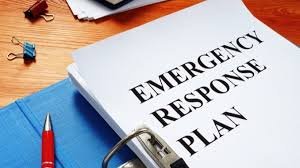
Course Introduction
Effective emergency response and crisis management are crucial for ensuring safety, minimizing risks, and safeguarding assets in dynamic and hazardous environments. This training is designed to equip participants with comprehensive skills in planning, coordination, leadership, and control to handle incidents, emergencies, and crises effectively. Through a blend of theory, practical exercises, and case studies, participants will learn to design and implement robust emergency response frameworks.
Learning Objectives
By the end of this course, participants will be able to:
1. Differentiate between incidents, emergencies, and crisis situations.
2. Implement methods to prevent escalation and manage complex scenarios effectively.
3. Strengthen on-scene leadership and decision-making abilities.
4. Organize and operate Emergency Control Centers (ECCs), Emergency Response Teams (ERTs), and Crisis Management Teams (CRTs).
5. Address human factors, including psychological readiness, resource allocation, and team discipline during emergencies.
Target Audience
This course is ideal for:
- Professionals managing safety, emergency, or crisis management across industries.
- Team leaders, managers, and responsible parties from organizations, divisions, or municipalities with emergency response obligations.
- Fire, safety, and security professionals, including high-rise safety managers and risk or insurance professionals.
- Line managers and supervisors looking to enhance their emergency response knowledge and skills.
Course Modules
Day 1: Foundations of Emergency Planning
- Principles of hazard action prevention.
- Conducting vulnerability analyses and risk assessments for hazardous materials.
- Development and structure of a crisis management manual.
Day 2: Designing Emergency Response Plans
- Writing comprehensive emergency response plans.
- Identifying critical contents and procedures.
- Emergency organization and resource assessment.
- Plan implementation, employee training, and continuous updates.
Day 3: Organizing Control Structures
- Establishing and operating Emergency Control Centers (ECCs).
- Equipment, communication, and resources for ECCs.
- Roles and functions of Emergency Response Teams (ERTs) and Crisis Management Teams (CRTs).
Day 4: Incident Command and Control
- Forward Incident Control (FIC) and control point coordination.
- Emergency action procedures: evacuation, medical, fire, explosion, and hazardous materials response.
Day 5: Case Studies and Practical Applications
- Bhopal Gas Tragedy (1984, India), Grenfell Tower Fire (2017, UK), Deepwater Horizon Oil Spill (2010, Gulf of Mexico)
- Regional-based scenarios and lessons learned.
- Developing media communication strategies during crises.
Related Courses
Strategic Level Program in Emergency Shutdown System Management
A strategic-level view of emergency shutdown systems, current ESD trends and their role in the organisation's operations. Participants gain expert knowledge of government legislation and litigation risk, along with ESD and product certification schemes.
Fundamentals of Life Support Course (BLS)
Built for nurses providing professional basic life support to emergency patients. Participants learn why high-quality CPR changes survival outcomes, and practise the early, appropriate use of an automated external defibrillator.
Professional HSSE Gap Analysis and Action Planning
Learn the gap analysis process: its templates, criticality and impact coding, and the reports it produces. Participants then turn those findings into action plans that genuinely improve HSSE processes rather than simply documenting them.