Emergency & Evacuation Planning for Industrial Safety
Learn what an emergency action plan and evacuation floor plan must contain. Participants learn to recognise violations of exit route requirements, and to judge whether their own organization's arrangements would hold up when an evacuation is actually called.
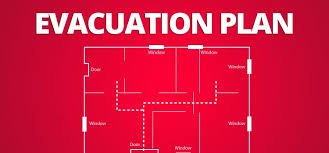
Program Objectives:
Upon course completion, the participants are expected to have acquired an ability to list the elements of an emergency action plan and emergency evacuation floor plans, recognize violations of exit route requirements, determine whether their organization/plants requires an emergency action plan, and develop & implement workplace emergency action and fire protection plans.
Course Outlines:
The Emergency Action Plan (EAP) for Industrial Establishments
• List key elements in the Emergency Action Plan (EAP).
• Discuss reporting requirements under the EAP for your organization
• Describe a typical evacuation procedure if a fire occurs.
• The important requirements for exit routes.
• Describe evacuation warden requirements and duties.
• The requirements for employees who do not evacuate.
• Discuss requirements for accounting for employees and assembly areas.
• Identifying important points when coordinating with fire, rescue, and medical services.
Review, Coordinate & Update
• Coordinating with other organizations
• Coordinate practice with other organizations
• Update the EAP regularly
Developing the Emergency Action Plan (EAP)
• The EAP must meet specific needs
• Potential natural or man-made emergencies
• Develop rescue and medical assistance strategies
• Important communications considerations
• Reporting fires and other emergencies
• Alerting employees
• How and when to train employees
• Conducting drills and retraining
The Fire Prevention Plan (FPP)
• Describe responsibilities for Fire Prevention Plan (FPP) managers and administrators.
• Discuss FPP responsibilities for supervisors and employees.
• Describe the requirement for a written FPP and identify components.
• Identify at least five best practices under the FPP.
• List and give examples of the various fire hazards in the workplace.
• Identify and describe the two primary types of fire extinguishing systems.
• Describe the PASS method for using fire extinguishers.
• Describe FPP education and training requirements for managers, supervisors, and employees,
Policies and Procedures
• Multiple policies
• Duties and responsibilities of the EAP team
• Determine specific evacuation routes and exits
• Assisting people during evacuations
• Accounting for all employees
• Accounting for visitors
Responsibilities & Training
• Establish a chain of command
• Who is in charge?
• Designate evacuation coordinators
• Designate evacuation wardens
• Conduct employee EAP training
• General responsibilities
• Retraining and practice drills
Industrial Health & Safety Considerations
• Hazard communication
• Walking & working surfaces
• Formaldehyde awareness
• Hazardous materials
• Personal protective equipment
• Confined spaces
• Permit required confined spaces
• Lockout/ Tag-out
• Materials handling & storage
• Lead safety in the workplace
• Process safety management of highly hazard materials
• Welding, cutting, and brazing
• Ionizing and non-ionizing radiation safety
• Hazards of asbestos in the workplace
• Ergonomics
• Electrical safety
• Record keeping & reporting
• Workplace violence
• Hazardous substances & industrial hygiene
• Machine guarding safety
Related Courses
Strategic Level Program in Emergency Shutdown System Management
A strategic-level view of emergency shutdown systems, current ESD trends and their role in the organisation's operations. Participants gain expert knowledge of government legislation and litigation risk, along with ESD and product certification schemes.
Fundamentals of Life Support Course (BLS)
Built for nurses providing professional basic life support to emergency patients. Participants learn why high-quality CPR changes survival outcomes, and practise the early, appropriate use of an automated external defibrillator.

Professional HSSE Gap Analysis and Action Planning
Learn the gap analysis process: its templates, criticality and impact coding, and the reports it produces. Participants then turn those findings into action plans that genuinely improve HSSE processes rather than simply documenting them.