Artificial Intelligence to Revolutionize Fire Safety and Emergency Response
AI is changing how fire incidents are prevented, detected and managed. Participants examine where these technologies genuinely add value across fire safety and emergency response, and what adopting them means for existing detection and response practice.
Introduction:
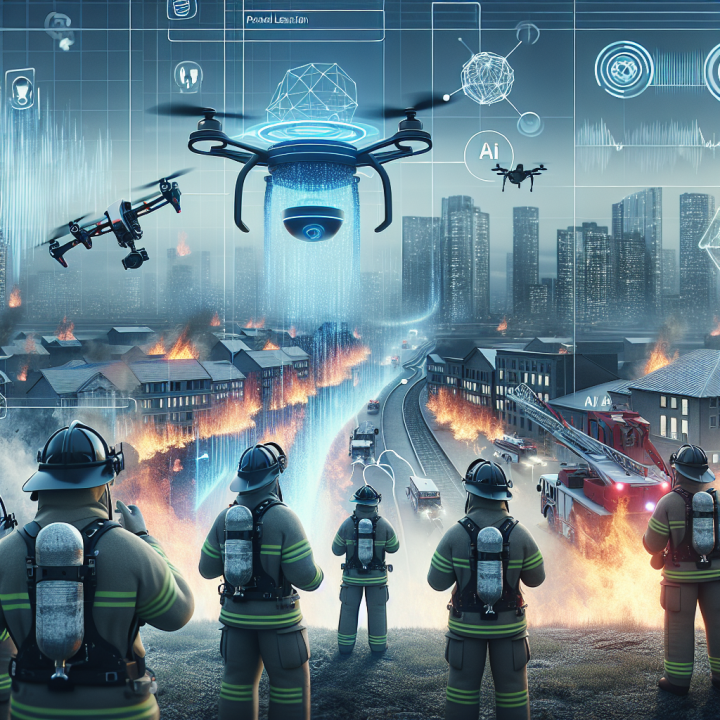
The integration of **Artificial Intelligence (AI)** in fire safety and emergency response is transforming the way we prevent, detect, and manage fire-related incidents. This course is designed to provide participants with an understanding of how AI-powered technologies can enhance fire safety measures, optimize emergency response strategies, and reduce risks. Through practical insights and real-world applications, participants will learn how AI-driven solutions, such as predictive analytics, smart sensors, and automated decision-making systems, are shaping the future of fire safety.
Objectives:
By the end of this course, participants will be able to:
1. Understand the role of AI in fire safety and emergency response.
2. Explore AI-driven fire detection, prevention, and mitigation technologies.
3. Learn about predictive analytics and machine learning applications in fire risk assessment.
4. Examine real-time AI-powered emergency response systems and smart firefighting techniques.
5. Develop strategies for integrating AI solutions into existing fire safety frameworks.
Who Should Attend?
This course is suitable for:
1. **Firefighters and Emergency Responders** – Professionals looking to leverage AI for enhanced situational awareness and faster decision-making.
2. **Fire Safety Engineers and Risk Assessors** – Experts interested in incorporating AIdriven risk assessment models.
3. **AI and Data Science Professionals** – Individuals developing AI applications for safety and emergency response.
4. **Government and Public Safety Officials** – Decision-makers responsible for implementing AI-driven fire safety measures.
5. **Facility Managers and Building Security Teams** – Personnel involved in fire prevention and risk management within buildings and industries.
6. **Students and Researchers** – Those exploring AI applications in disaster management and fire safety.
**Day 1: Introduction to AI in Fire Safety and Emergency Response**
- Overview of fire safety challenges and limitations of traditional methods.
- Understanding AI fundamentals: Machine learning, deep learning, and computer vision.
- Role of AI in fire prevention, detection, and response.
- Case studies of AI implementation in fire safety.
**Day 2: AI-Powered Fire Detection and Prevention**
- Smart sensors and IoT for fire detection.
- AI-driven image and video analysis for smoke and fire identification.
- Predictive analytics for fire risk assessment and prevention.
- Hands-on session: Exploring AI-based fire detection tools.
**Day 3: AI in Emergency Response and Crisis Management**
- AI-enhanced real-time emergency response systems.
- Autonomous drones and robotics in firefighting.
- AI-powered communication and coordination during fire incidents.
- Hands-on activity: Simulating an AI-based emergency response scenario.
**Day 4: AI-Driven Decision Support Systems for Firefighters**
- Machine learning models for fire spread prediction.
- AI-assisted route optimization for emergency vehicles.
- Wearable AI technology for firefighter safety.
- Hands-on session: Evaluating AI-powered decision support tools.
**Day 5: Future Trends, Ethical Considerations, and Implementation Strategies**
- Challenges and ethical considerations of AI in fire safety.
- Regulatory and compliance requirements for AI-driven fire response systems.
- Implementation strategies for integrating AI into existing fire safety frameworks. - Final project: Designing an AI-driven fire safety and emergency response strategy.
- Course conclusion and next steps.
Related Courses
Strategic Level Program in Emergency Shutdown System Management
A strategic-level view of emergency shutdown systems, current ESD trends and their role in the organisation's operations. Participants gain expert knowledge of government legislation and litigation risk, along with ESD and product certification schemes.
Fundamentals of Life Support Course (BLS)
Built for nurses providing professional basic life support to emergency patients. Participants learn why high-quality CPR changes survival outcomes, and practise the early, appropriate use of an automated external defibrillator.
Professional HSSE Gap Analysis and Action Planning
Learn the gap analysis process: its templates, criticality and impact coding, and the reports it produces. Participants then turn those findings into action plans that genuinely improve HSSE processes rather than simply documenting them.